
A minimalist shoe can now go to a client meeting
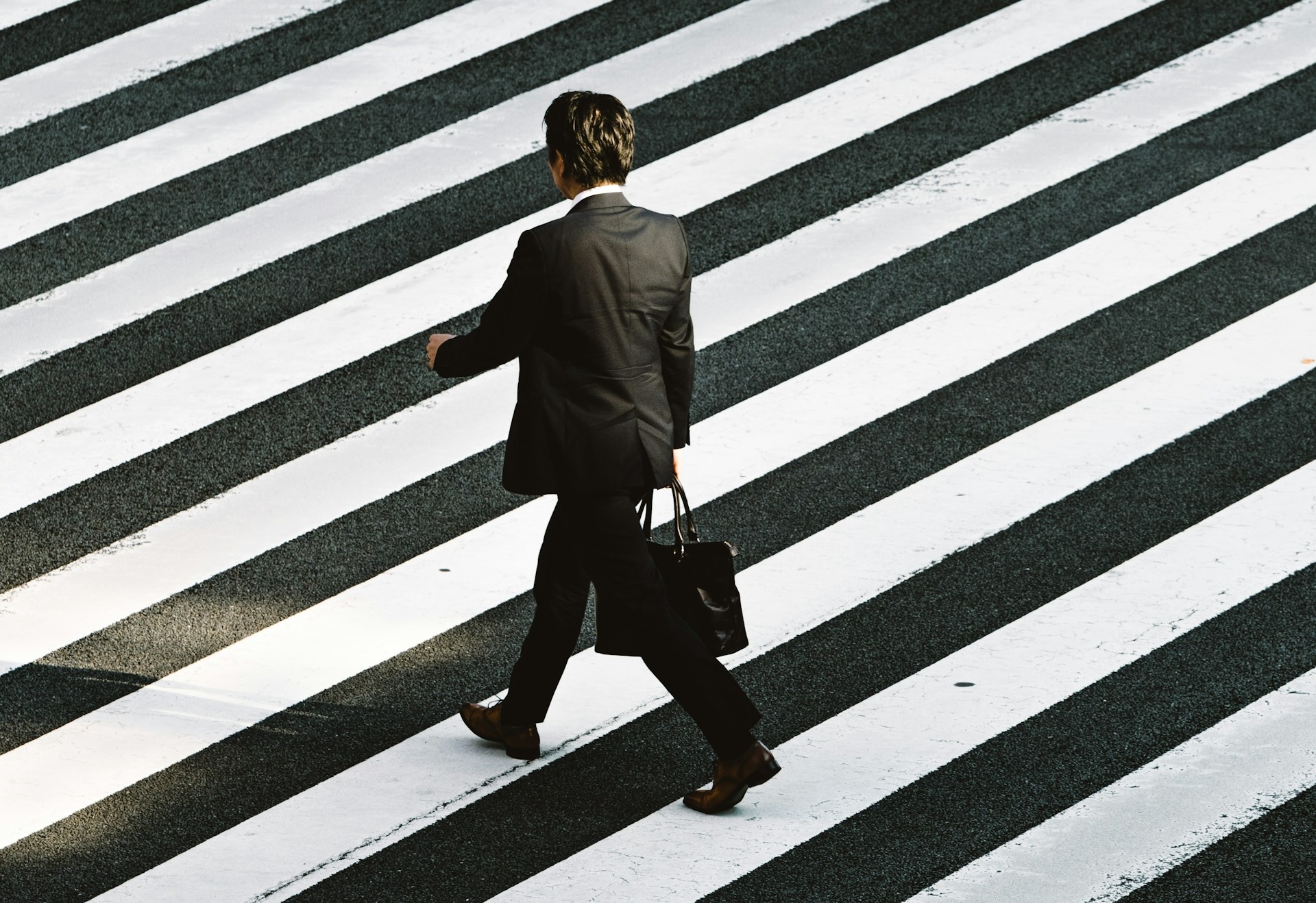
The hardest part of switching to minimalist footwear used to have little to do with feet. It was the wardrobe. A man who wanted a zero-drop sole and room for his toes usually had to accept a shoe that looked built for a running track or a mountain path, and for anyone who spends the working week in chinos and a jacket, that ended the conversation. Today, barefoot shoes for men come in forms that used to be hard to find: smart casual lace-ups, leather walkers, Chelsea boots, even a slip-on clog. The construction underneath has barely moved. Everything around it has.
The sole stayed, the silhouette moved
What makes a shoe minimalist is mostly invisible once it is on the foot. There is no height difference between heel and forefoot, which is what zero-drop means. The toe box follows the shape of a foot instead of narrowing to a point. The sole is thin and flexible enough to bend with the foot rather than act as a platform underneath it. None of those three features dictates what the upper has to look like.
And yet for a long time the category was dominated by mesh, bright colours and visible toe articulation, because the first people buying these shoes were runners and hikers. That early association stuck. Plenty of men who were curious about the idea set it aside because the shoe did not fit their day, not because the principle left them cold. A shoe that can only be worn at weekends gets worn at weekends, and a habit built over two days a week grows slowly.
What a current men’s range looks like
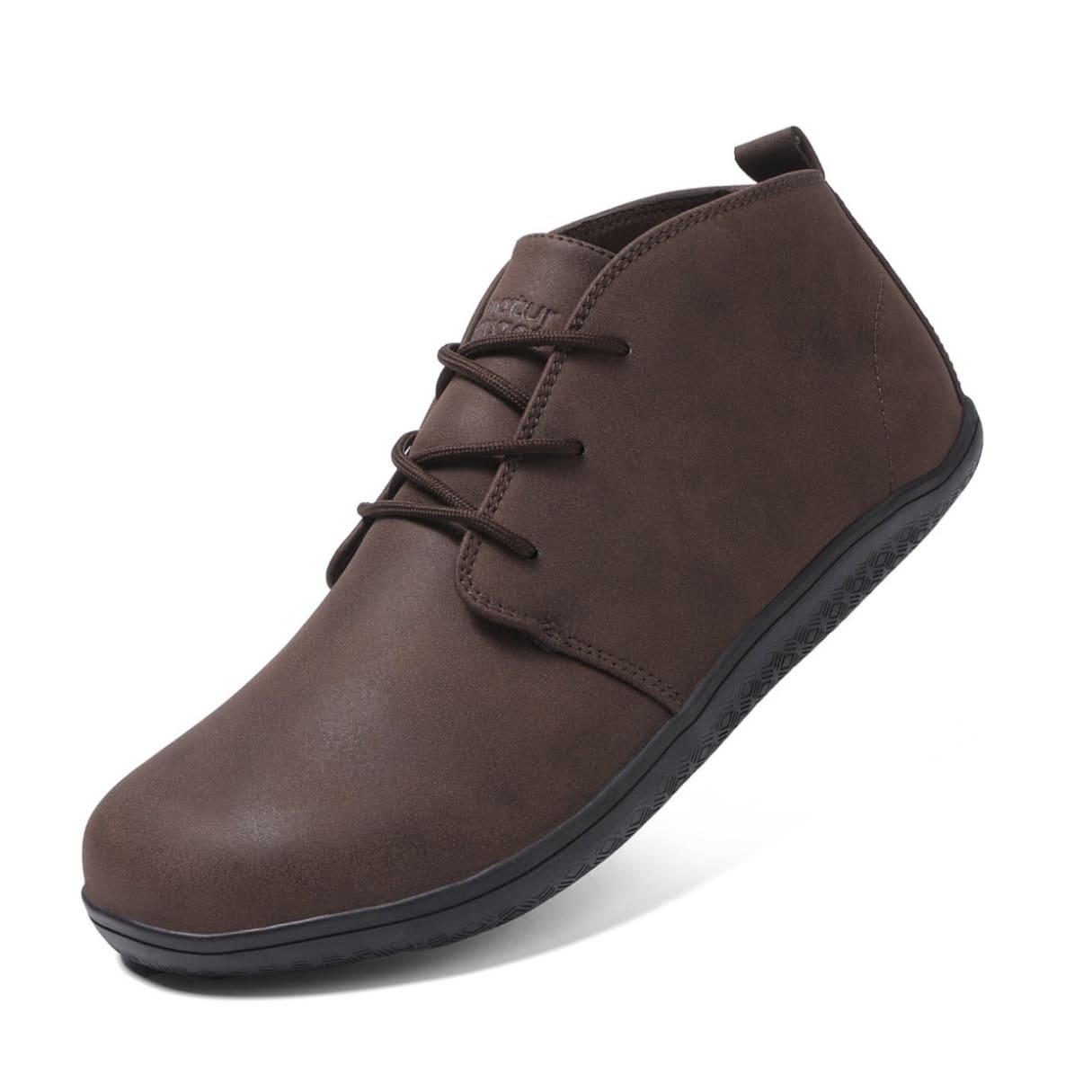
Look at a single current catalogue and the spread is wide. The men’s collection linked above includes trail models such as the Terra Trail, the Tracker in vegan leather and the lightweight Outback X; city shoes like the Urban Pro 2.0, with a knit upper, and the Urban Breeze 2.0; a training shoe for the gym; sandals; slippers for the house. Next to those sit the George 2.0, sold explicitly as a smart casual shoe for the office, the Walker Leather, labelled waterproof, and the Alaskan 2.0, a Chelsea boot meant for everyday winter wear.
Two of those show where the shift happened. The smart casual model keeps a plain upper in dark brown or black, the kind of shoe nobody comments on in a meeting room. The Chelsea boot takes a style most men already own and keeps its outline while changing what sits underneath. In both cases the design logic is identical: borrow a familiar shape, keep the minimalist sole.
Why the look mattered more than it seemed
There is a practical reason this goes beyond appearances. The shoe that shapes how someone walks is the one worn for the most hours, and for a man with an office job that is rarely the trainer. It is the pair on his feet from the morning commute until the evening. If the minimalist option exists only in sporty form, it stays a part-time experiment, while the everyday pair remains the conventional one with a raised heel and a tapered front.
A range that reaches into smart casual and winter changes that arithmetic. It becomes possible to wear the same kind of sole across most of the week, which is closer to what supporters of minimalist footwear describe as the whole idea: a consistent way of walking rather than an occasional one. Whether that consistency brings the benefits often attributed to it is still debated, and no pair of shoes should be expected to fix anything on its own. Still, it is hard to form an opinion about a way of walking you only try on Saturdays.
What has not changed, and should not
Some things stayed exactly where they were, and they are the ones that still need attention. A smart casual minimalist shoe is still a thin shoe. The ground feels closer, cobbles are more noticeable, and a long day on hard office floors is a different experience from the same day in a cushioned sole. The usual advice is to make the switch gradually, alternating pairs and adding hours over several weeks instead of changing everything on a Monday.
Fit has not changed either. A wide toe box only does its job if length and width are right, which is why sizing on minimalist ranges is usually expressed in centimetres of foot length and why more than one width exists. Measuring the foot at the end of the day, standing, wearing the socks you plan to use, remains the most reliable starting point. A dressier shoe makes it tempting to size down for a sleeker line. That undoes the reason for buying it.
A different first question
For a long time the first question was whether the look could be lived with. Once a range includes office shoes and winter boots, that question fades and a more useful one takes its place: which hours of the week should change first? For most men with a desk job the answer turns out to be the hours they had ruled out at the start. The commute, the office, the walk to lunch, the meeting at four. The dress code was the last thing standing in the way, and it has stepped aside.